


COP27 Solutions Day

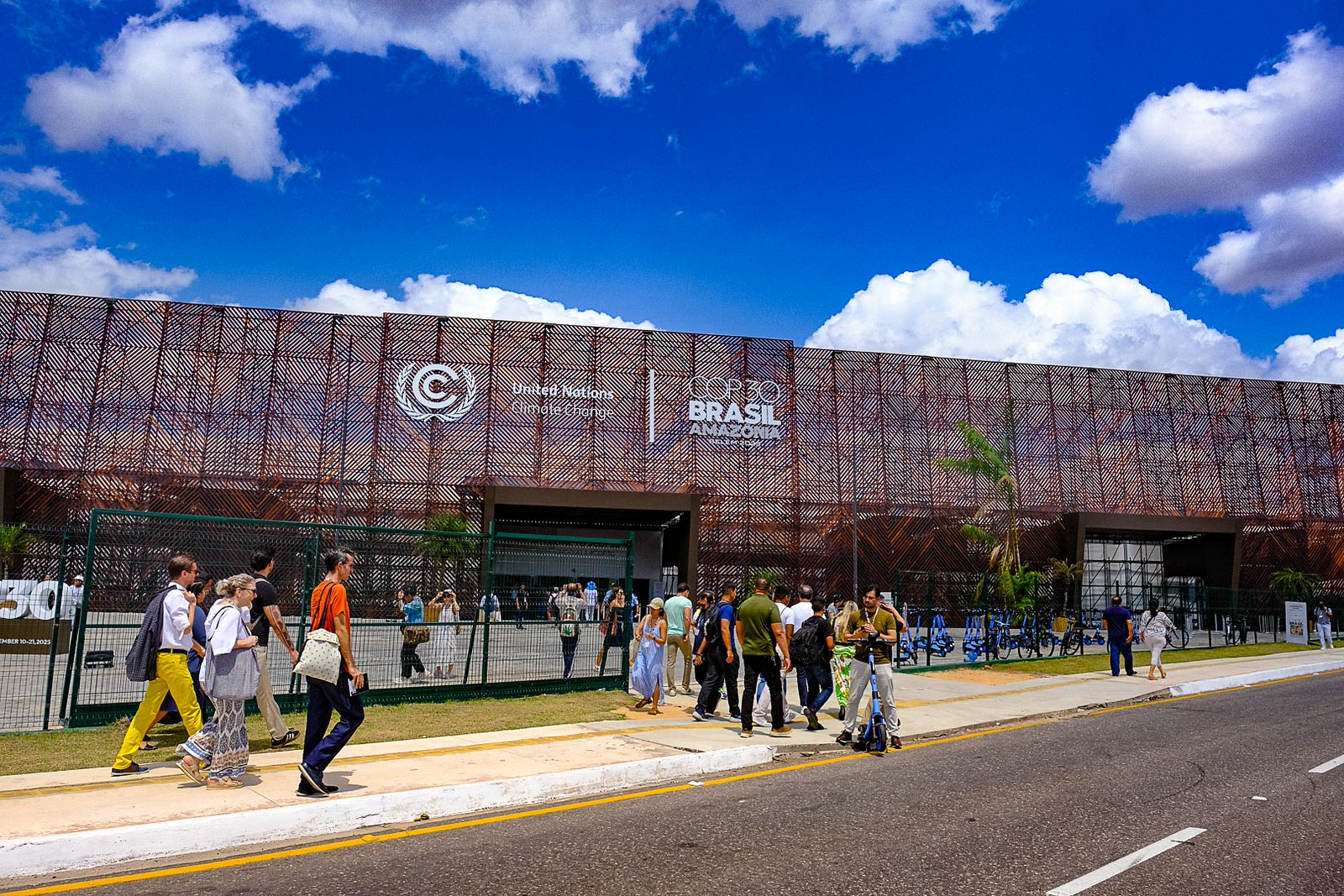
Solutions will be the theme of the day on November 17 at COP27. From holistic to sectorial, solutions to the climate crisis range from global to local and differ in scale. This day will foster and facilitate the ongoing exchange between policymakers, businesses and innovators. Experiences, awareness and viability will be at the centre of the dialogue to imagine a more sustainable future.

Science tells us we can still prevent some of the worst climate change impacts, but there is a need to find viable solutions and promote those that already exist and are currently overshadowed by efforts to delay action.  We live in an era of climate opportunity: finding innovative solutions to climate change-related challenges is a key aspect to transboundary climate negotiations. International gatherings such as the COP27 are important grounds to build a bridge between decision-makers and innovators from the private sector, including SMEs and finance

Solutions range from global to local, presenting a wide variety of approaches in terms of actors involved and the scale considered. Among others, climate services contribute to the successful integration of scientific information in policies, business models and technological advances. Technological and digital innovation is at the forefront of the climate solution debate concerning sectors with the largest share of emissions worldwide, including transport, infrastructure and buildings

Emissions follow the linear growth that is central to the current economic system. Envisioning climate solutions entails considering alternative economic models, such as the circular economy. A paradigm shift is fundamental to leave behind the current high-emission pathway, but finding solutions to adapt to a new climate in a less optimistic scenario is also crucial. Inspiration can come from the natural environment itself, leading to the so-called Nature based Solutions (NbS),  actions that protect, manage and restore ecosystems with mutual benefits for both human well-being and biodiversity. Nature-based Solutions are used to design and devise sustainable infrastructure as well as protecting human systems from future extreme events. 

All stakeholders involved are called to act in the creative process needed to limit the impacts of global warming, harnessing the different types of solutions available through dialogue, collaboration and a multidisciplinary approach.


Share

climate-justice-risks
Article

Adapting to rising climate risks: A matter of justice

The EEA’s first ever European Climate Risk Assessment (EUCRA) identifies justice as a key component of adaptation. Yet justice is not just about measuring the equity in distribution of benefits and burdens from climate impacts, it’s also intrinsically tied to the concept of resilience. 

Interview

Rising seas, rising challenges: Informing the future directions of coastal resilience

Sea-level rise will continue to threaten ecosystems and communities in the coming decades. However, the extent and magnitude of this threat is still an open question that researchers are intent on investigating in an effort to provide decision-makers with accurate and timely information. Giulia Galluccio, CMCC director of ATEC, vice-chair of JPI Climate and co-lead author of two chapters of the 1st European Assessment Report on Sea Level Rise, and CMCC researcher Elisa Fiorini Beckhauser walk us through the report, its significance and implications.

abstract lights
Article

Manifestations of chaos: The rise, fall and revival of the Koopman operator

Modeling and data-driven analysis are two essential pillars of climate science. The complex and chaotic nature of the climate system defies straightforward predictions like those possible with linear physical systems. A comprehensive theoretical framework for complexity could provide the context and tools to fully describe it. Could a century-old mathematical tool hold the key? The revival of the Koopman operator offers a promising path to achieve a more complete theoretical understanding of the climate system.